Oppimi is back, with a bigger mission
Co-founder Elisa Calgaro, PhD, has acquired Oppimi back and is scaling it from Switzerland. The mission now goes beyond handwriting: writing first, then reading, numbers and memory.



Three short games a year show how your child's writing is growing, and what to do next.
Oppimi shows parents and teachers how a child is learning to write, three times a school year, and what to do next.
How your child writes, not just the finished page: speed, pauses, pen lifts and pressure.
Three check-ins a school year show how your child's writing is growing.
A short plan for home and practice games, matched to what your child is working on.
A report in plain words for the teacher or your paediatrician.
Built on more than ten years of work with children in Italy, Finland, China and Hong Kong. Children's data is encrypted on the device and never sold.
Around the world, children spend more time on screens, schools are short of teachers, and learning results are falling. The basics every child builds on, writing, reading and counting, are getting less time just when children need them most.
Points lost in the OECD average score, PISA 2018 to 2022
Source: OECD, PISA 2022.
Learning poverty in low- and middle-income countries
Source: World Bank, UNESCO, UNICEF and partners, 2022.
Daily screen media use of 8- to 12-year-olds in the United States, hours
Source: Common Sense Media, 2021 census.
Share of education systems with a national ban on phones in school
Source: UNESCO Global Education Monitoring Report team.
An estimated 7 to 15% of school-age children have a writing disorder. In a class of 25, that is two to four children.
Parents and teachers need a clear picture of how each child is learning, in a form they can use on Monday morning.
Handwriting is not only about neat letters. When writing becomes fluent, a child's attention is free for what matters: ideas, words, spelling and meaning.
Research on how children learn to write shows that handwriting fluency is one of the component skills linked to the quality of the texts children produce. When every letter takes effort, little effort is left for the story itself.
Writing letters by hand also helps children learn to recognise them. In a small brain-imaging study, pre-school children who had practised printing letters by hand showed more activity in the brain's reading network when they later looked at those letters than children who had practised by typing or tracing.
"Handwriting therefore may facilitate reading acquisition in young children."James & Engelhardt, 2012, Trends in Neuroscience and Education
Automatic letter formation leaves working memory for planning and spelling.
Forming a letter by hand links its shape, its movement and its sound.
After a decade of more screens, Sweden decided in 2023 to bring printed books and handwriting practice back into classrooms.
Finland stopped teaching joined-up cursive in 2016, and Swiss cantons moved to a simpler basic script.
Neuroscientists, psychologists and leading newspapers keep returning to the same idea: the small, precise movements of the hand are closely linked to how children learn to read, write and count.
Fine motor skills at school entry help predict later achievement in maths, reading and science. Writing by hand engages the brain in ways typing does not. And as screens replace pens, researchers are asking what children lose.
“Engaging the fine motor system to produce letters by hand has positive effects on learning and memory.”
Read the article › The New York Times2014Psychologists and neuroscientists on why it is too soon to call handwriting a relic of the past.
Read › Frontiers in Psychology2024A high-density EEG study at the Norwegian University of Science and Technology, with implications for the classroom.
Read the study › Developmental Psychology2010Across six longitudinal datasets, fine motor skills at school entry added to the prediction of later maths, reading and science achievement.
Read the study › Child Development2012Children's fine motor skills and their executive function each contributed to how well they did in their first school year.
Read the study ›Headlines and summaries from the publications named. Oppimi is not affiliated with them.
Specific learning difficulties affect how a child reads, writes or works with numbers. They have nothing to do with intelligence or effort.
Dysgraphia is a difficulty with writing: handwriting that stays slow, effortful or hard to read despite practice. It often appears together with dyslexia or attention difficulties. Writing disorders are estimated to affect about 7 to 15% of school-age children.
Recognition is growing. In Italy, the share of students with a certified specific learning disorder rose from 0.9% in 2010/11 to 6% in 2022/23.
What parents and teachers often notice first:
These signs alone do not mean a child has a learning difficulty. If you are worried, talk to your child's teacher, paediatrician or a psychologist.
Oppimi turns a short game on a tablet into a picture of how a child writes and remembers, and follows it through the school year. Reading and numbers are coming next.
A paper test shows the finished page. Oppimi also records how the page was made: how fast the pen moves, where the child pauses, how often the pen lifts, how the letters are sized and aligned. Three checks a year, in autumn, winter and spring, show how each skill is growing.
The result is not a label. It is a description parents and teachers can act on, and a clear suggestion to talk to a professional when that would help.
The child sets off on an expedition through Gotopia, on a tablet with a stylus.
The stylus records the writing movement about 200 times a second.
Parents receive a report in plain words: strengths, progress and areas to practise.
Ideas for practice at home and in class, and a report to share with a teacher or specialist.
Every report opens with what the child does well, shows the change since the last check, and ends with something to try at home.
How the report worksSofia wrote more fluently than in the autumn and lifted her pen less often. Her memory for sequences stayed steady. Letter size is the area to practise next.
Example with an invented child. The report describes how a child worked at each check and how that changed. It is not a diagnosis.
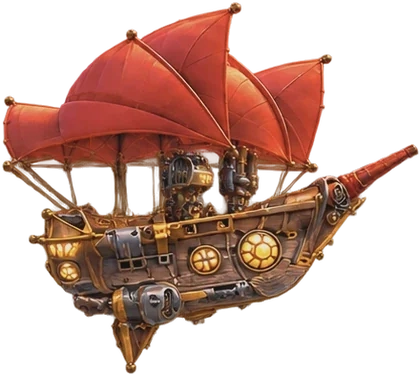
Gotopia is a world of red canyons, golden deserts, floating forests and quiet lagoons, explored aboard a sky ship.
Each region holds a few short activities. The story gives children a reason to keep going; the instructions stay exactly the same for every child, so results can be followed over time.




A child's progress depends on the adults around them talking to each other. Oppimi gives parents and teachers the same picture, in the same words.
Is your child's writing on track? Oppimi shows you, in plain words.
A clear picture of every child's writing, three times a year, in one lesson.
Handwriting can be judged by its product, the finished page, or by its process, the movement that produced it. Oppimi measures both.
Studies with digital pens show that children who struggle with writing differ most in the process: they pause more, lift the pen more often and spend more time with the pen in the air. A stylus on a tablet records exactly these signals. Each measure in Oppimi is chosen from peer-reviewed research, and its evidence level is shown in the report.
388 primary-school children copied a sentence in cursive twice: once as fast as they could, once as neatly as they could. Together, Oppimi's handwriting measures showed acceptable internal consistency (Cronbach's α = .78), and writing time was closely linked to how the pen moved.
Correlation with writing time; all p < .001. Presented at the AIRIPA national congress, 2019. See how the analysis worksWith the child neuropsychiatry service of ASST Vimercate, part of the Lombardy public health system, children aged 9 to 11 used the Oppimi assessment and practice game. Clinicians found the assessment acceptable and informative, and the children used the game willingly.
Since 2015 Oppimi has worked with a hospital, a specialist centre, primary schools and a university in Italy, and with schools in Finland, mainland China and Hong Kong.
Canada · Switzerland · Italy · Finland · Mainland China · Hong Kong
Oppimi has been rebuilt from the ground up: one platform, one story world and one report for every skill a child learns with, designed from day one to grow across countries and languages.
NextA native Android app, and a WeChat mini program for families in mainland China.
What is new at Oppimi, and the milestones that brought us here.
Co-founder Elisa Calgaro, PhD, has acquired Oppimi back and is scaling it from Switzerland. The mission now goes beyond handwriting: writing first, then reading, numbers and memory.
Oppimi has been rebuilt from the ground up: one platform, one story world and one report for every skill. English, Italian and Chinese from the start, with personal details encrypted on the device.
The iPad app is coming soon to the App Store, with Android and a WeChat mini program for families in mainland China next. Schools can already ask for free access for their pupils.
From 2020, as school closures slowed pilots in Europe, Oppimi moved its focus to China, building on the schools it had worked with in mainland China and Hong Kong since 2018. Elisa Calgaro kept supporting the company there, and the Oppimi game stayed live for Chinese families and schools through 2025.
Those six years shaped the platform we are launching in 2026: Chinese from the start, a WeChat mini program planned for families in mainland China, and children's data kept in the country where it is collected.
Remote school made homework harder and friendships more distant for many children with learning difficulties. We shared ideas for parents on keeping both going, and in 2020 we released a home version of the Oppimi app for families during school closures.
Children with learning and attention difficulties are too often described by what they cannot do, or mistaken for lazy. We called for earlier support, and for better tools for the teachers and parents around them.
IC Cortemaggiore "Terre del Magnifico", near Piacenza, chose Oppimi for its primary schools: more than 700 pupils were to write on tablets with a digital pen, giving teachers a clear picture of each child's handwriting.
Our partners presented their first results with Oppimi. The University of Parma study of 388 primary-school children found Oppimi's handwriting measures consistent across a whole school, and the ASST Vimercate hospital team reported its pilot with children aged 9 to 11.
A three-year research collaboration to study handwriting in Chinese characters with machine learning, with the aim of building the first assessment scale for Chinese handwriting.
With Microsoft, pupils wrote on Surface tablets with digital pens so that teachers could see how Finnish-speaking children write and guide practice. The Finnish broadcaster Yle covered the pilot.
A partnership with TimeLink, which equips hundreds of Chinese schools with interactive whiteboards and cloud platforms, to bring Oppimi into its classrooms and offer teachers courses on learning difficulties.
We showed Oppimi to schools and education partners at the Western China International Expo Center, 11 to 13 May 2018.
A partnership with PuYing-Olicom, an electronics manufacturer based in Hong Kong with companies in Italy and mainland China, to develop devices for health and education.
A two-year agreement with Rotaract, Rotary Romania, whose volunteers introduced the Oppimi platform to schools in Romania.
The Oppimi app for iPad is coming soon. Write to us and we will tell you as soon as it is ready.
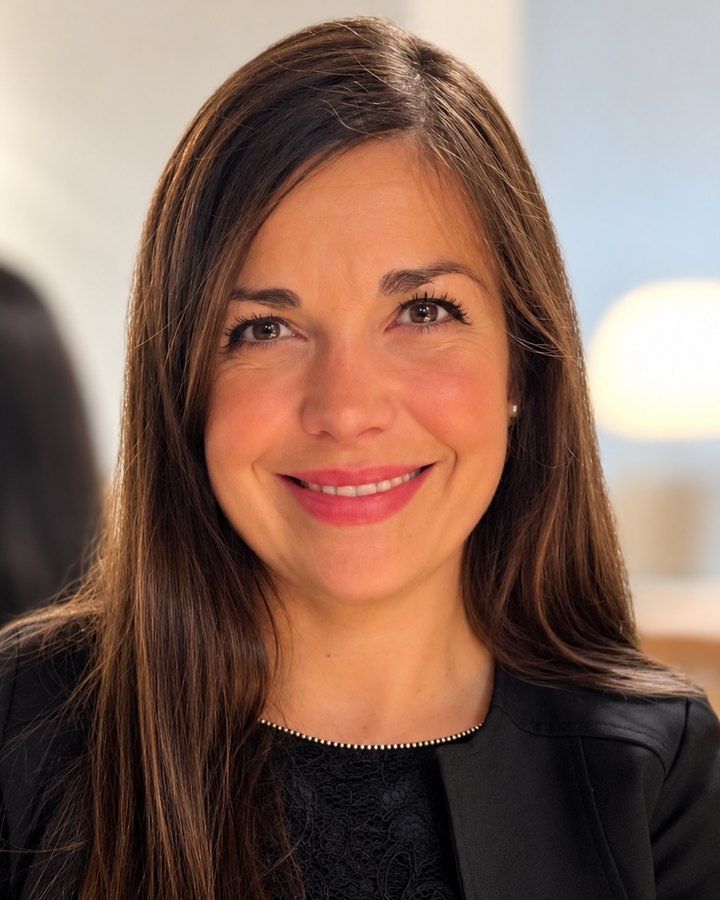
Elisa Calgaro, PhD, co-founded Oppimi in 2015. In 2026 she brought it back, to take it further than ever before.
Elisa holds a PhD in Linguistic, Philological and Literary Sciences from the University of Padua. As co-founder, she helped take Oppimi from an idea about how children write to pilots with hospitals, schools and universities in four countries. In 2020 she stepped back from the company but kept supporting it in China, where the Oppimi game stayed live through 2025.
In 2026 Elisa acquired Oppimi back. As CEO she is scaling it globally from Switzerland, with an extended mission and scope: no longer handwriting alone, but the core skills every child learns with, writing first, then reading, numbers and memory.
Help every child build the skills they learn with, and help the parents and teachers around them follow their progress.
 Billy ZhengBoard member, investor
Schools: ask for free access for your pupils. Partners and researchers: talk to us about using our technology. Parents: we are here to help.
info@oppimi.org